1Getting found
Be found by the right people
- Lead generation audit
- Channel plan
- Advert matched to page
FOLLOW PASSIVAI YOUR WAY
RSS is a free way to follow websites without joining another email list or remembering to check for updates. Choose an RSS reader once and new PassivAi articles will appear there automatically.
RSS is free. You can stop following the feed whenever you like.
For trades, consultants and small teams
Your next customer could already be looking. Give them a clear route from finding you to getting in touch, and give yourself a system that records every enquiry and replies on time.
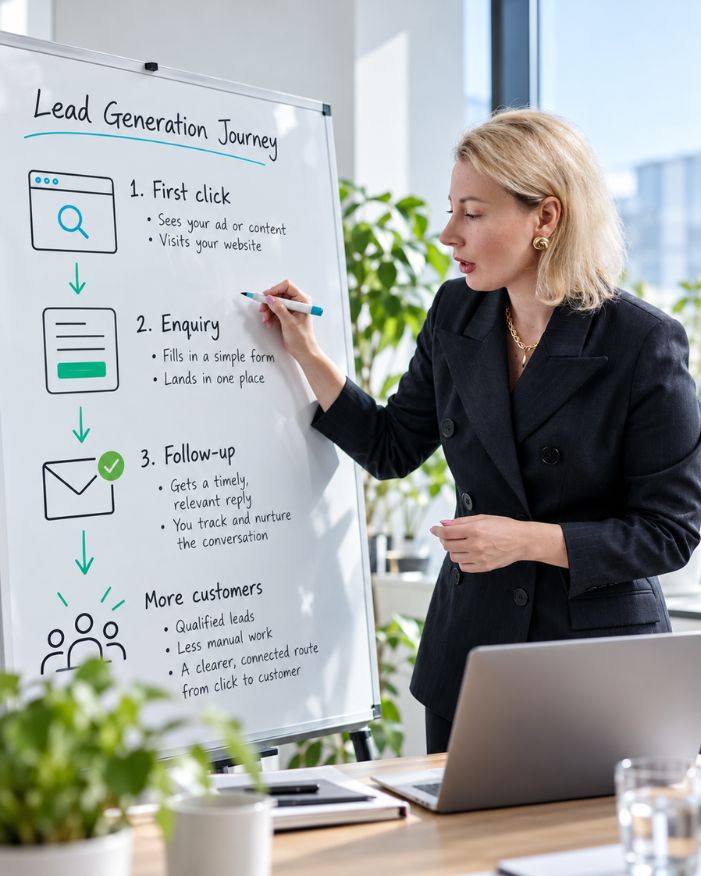
Catch every enquiry, wherever it arrives
A local business pays for a new website and starts running a few adverts. It works. Enquiries begin to arrive.

An everyday example
Four people showed interest that Tuesday. One got a quick reply. The rest depended on someone remembering.
Nothing here went wrong because the owner was careless. The marketing did its job. The trouble sits in the handover, where each enquiry relies on a person to notice it, record it and decide what to say.
A connected funnel closes those gaps. It gives every enquiry the same route in, the same record and a reply that suits what the person asked for.
More enquiries from the clicks you already get
Someone clicks your advert about garden drainage. In the next few seconds they decide whether to stay.
They are quietly asking three things. Is this for me? What do I get? What do I do now?
A homepage answers everyone at once, so they have to hunt.
A page made for that advert answers all three questions and offers one next step that suits how ready they are.
Paying for the click is only half the job. The page they land on decides whether you get the enquiry.
Plug the leaks first, then add traffic
Your website, adverts, email tools and records were added one at a time. Now they work alone. That is when these problems appear:

More visitors into that set-up only means more loose ends.
Connect the pieces first, and every new visitor meets a route that works.
Quick check you can do today. Send yourself an enquiry through every route a customer might use. Note how long each one takes to reach you, where it is recorded and what reply you get. The slowest route is usually the best place to start.
Make the fixes you tried work together
Each of these is a sensible thing to try. On its own, each one fixes a single stage and leaves the handover between stages to chance.
Every enquiry handled, without the juggling
A planned funnel is a chain of small steps. Each one hands the person and their details to the next.
What your customer sees
What happens behind the scenes
Automation carries the repetitive parts: recording, confirming, reminding and sorting.
You keep the parts that need judgement, such as pricing a job or deciding whether a project is right for you.

Built by someone who knows the work behind it
PassivAi® is run by a website developer who has been building for the web since 1995. That work grew to cover digital marketing, customer management systems and the business processes that sit behind them.
Much of it has been for service businesses, including complex systems for construction and landscaping. In those businesses an enquiry is the start of a chain: a site visit, a quote, a schedule, a team, an invoice. A lead form that ignores the rest of that chain creates work further down the line.
That background shapes how each funnel is planned. The question is never just how to collect more names. It is what should happen to each enquiry so it turns into the right next step for your business.
A lead generation system should do more than collect names. It should turn relevant interest into an organised next step.
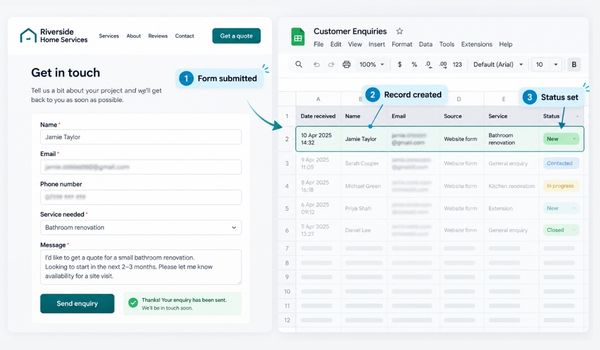
A working funnel, from first click to reply
The screenshot below shows a funnel designed and built for a real business. Read the caption with your own enquiries in mind. The parts that would matter most to you are usually the ones you check by hand today.
No need to follow every step. It is all built, tested and handed over for you.
A bit like driving a Ferrari Spider; Go from A to B super fast, in style with the wind in your hair and a smile on your face - but not sure how the engine works.
Done for you, one stage at a time
Pick one stage or join several. Each one fixes a different leak.
1Getting found
2Getting the enquiry
3Handling it
4Knowing what works
Example: one landscaping project, four stages joined
Need the pages themselves? See website and landing page design.
Need automation beyond enquiries? See business automation or CRM automation.
Enquiries that look after themselves
Connect the apps you already use and move each enquiry between them.
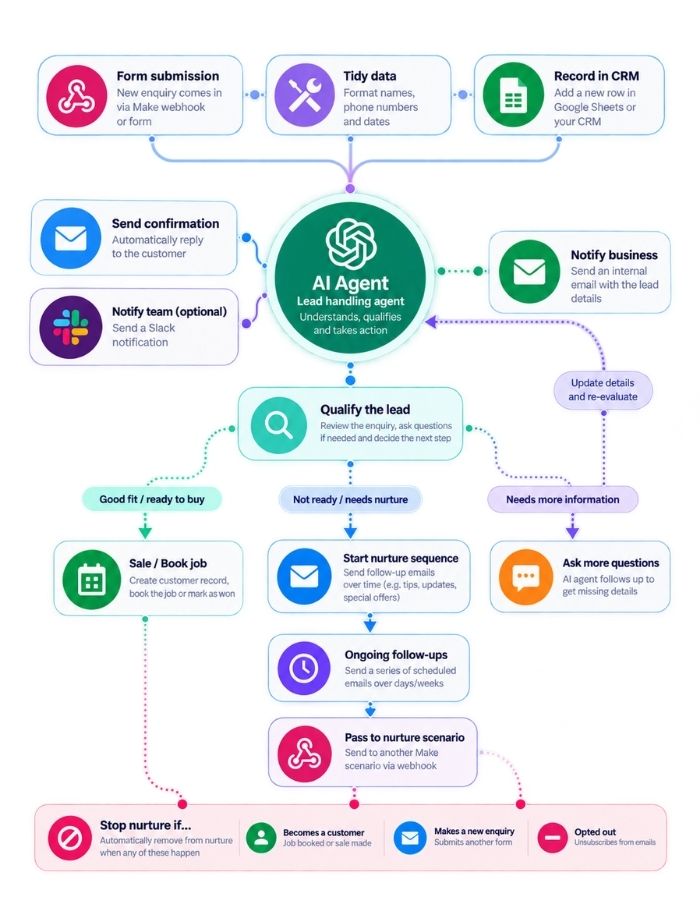
All of this is set up and running for you.
You spend your time on the enquiries, not the wiring behind them.
Prices, promises and anything unusual stay with you.
The scenario flags them for you to review.
More enquiries from the ads you already run
Your Meta or Google adverts can feed straight into the funnel.
Every paid click lands on a matching page, and every enquiry is tracked back to the campaign that brought it.
The matching pages are designed and built through a separate service:
See the landing page serviceWebsite and Landing Page DesignFor your visitors who are not ready to buy yet
Some of your visitors are not ready to ask for a quote.
A free resource gives them a smaller first step, and gives you their details.
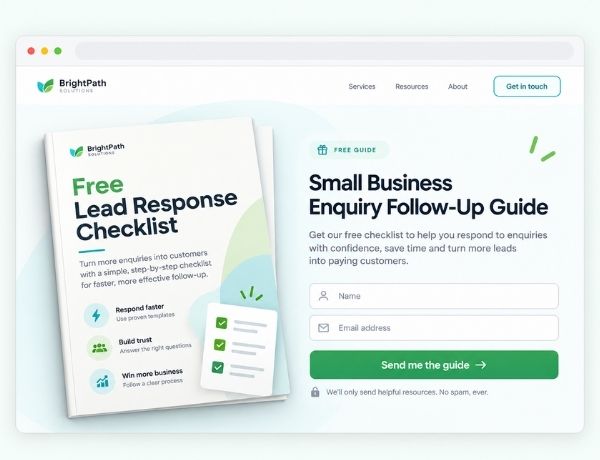
The best ones lead straight to the service you sell.
Warm leads without chasing by hand
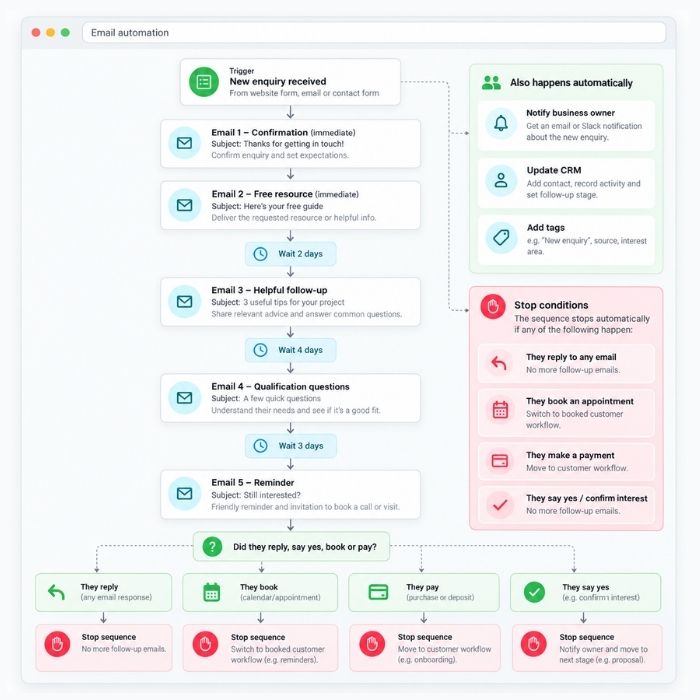
The first reply matters most, and the messages after it often decide who becomes a customer.
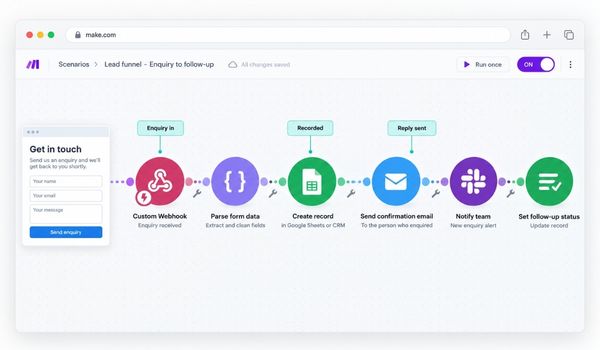
Nothing here for you to build or manage. It runs quietly in the background once it is set up.
Automated follow-up can include:
Good follow-up changes when the customer acts.
If they reply, book or pay, the sequence stops or moves to the next stage.
Nobody receives a "still interested?" email the day after they said yes.
For email tools that suit small businesses, see AI email marketing software.
Real projects that turned leads into customers
Click to see full size
Warmer leads before you reply
Click to see full size
Blog readers turned customers
Click to see full size
Homeowners help themselves
Planned and priced with no sales call
Everything runs remotely and in writing, so you can reply when it suits you.
Calls can be arranged for projects above £2,000 where they help.
Nothing to pay until you accept the proposal.
Know it fits before you spend a penny
Tick what sounds like your business
Tick off what sounds like your business below and watch the needle move.
A funnel makes a clear offer work harder. It cannot fix an offer that is still taking shape, an audience you have not chosen or prices that do not cover your costs.
If that sounds familiar, a written review of your business may be the better first step. See AI consulting for small businesses.
Straight answers before you commit
Usually not. Funnel pages can sit alongside your current website. Your written proposal says whether anything on your existing site needs to change.
Often, yes, where they allow connections. List what you use in your brief and the proposal will say what can be connected and what may need replacing.
No. A funnel can take visitors from search, social posts, emails, referrals or your own website. Advertising can add more visitors once the route is working.
No. AI is used only where it saves you time, such as summarising or sorting enquiries. Many journeys work well without it.
Then the first job may be getting found, with follow-up added later. Your proposal will suggest which comes first. A dedicated page and a useful free resource are often a sensible start.
Many CRMs connect through Make.com or their own integrations. Name yours in the brief and it will be checked before the quote is written.
Yes. Connecting one form to a spreadsheet and a confirmation email is a perfectly good first project. More can be added once it is working.
The proposal sets out which accounts everything lives in. Where possible, pages, data and automations are built in accounts you own, so you keep them.
It depends on the project. Common ones are a Make.com plan, an email platform, a CRM and a page builder. Any you need are listed in the proposal before you pay.
Every project is priced in writing after your brief is reviewed. You see the deliverables and the price before you commit.
That depends on the size of the project and how quickly access to your accounts is arranged. The timescale is stated in your written proposal.
No. You send a written brief and receive a written proposal. A call can be arranged for projects above £2,000 where it helps.
Everything you need to decide, in 30 seconds
The offer
A lead generation funnel, done for you.
Matching pages, short forms, instant records and timely replies, all planned, built and tested.
You get a recorded walkthrough at handover.
Your next step
Send a short written brief about what happens to your enquiries now.
You get a funnel proposal with flow diagrams, the price and the timescale.
Nothing to pay until you accept, and no sales call.
The cost of waiting
While the gaps stay open, enquiries in the wrong inbox or with a slow reply go cold.
The marketing that brought them in is paid for either way.
Every enquiry answered, from one short brief
Tell the form where your enquiries arrive now and who replies to them.
You get a funnel proposal with flow diagrams, the price and the timescale.
Nothing to pay until you accept, and no sales call.
More time back across your business